Showing posts with label asparagus. Show all posts

Tuesday, April 23, 2013

Oh No You Don't!

I have recently discovered a pest that only eats asparagus, and it is in my garden! It has a rather benign name, the Common Asparagus Beetle (Crioceris asparagi). These little buggers can breed two to three times in a season and the adults will overwinter in the asparagus patch. The adults and the larvae will both eat the plant. I didn't go Chuck Norris on them when I first discovered them, because I had not identified them. They could have been a beneficial insect for all I knew. Boy was I wrong.

Now that I have positively identified them, the gloves are coming off, this is war.  I didn't plant my asparagus patch and wait three years to eat it, to have these mono-diet Coleoptera monsters eat it all. They look cool though, sorta like a badass ladybug.  


These beetles will eat every part of the asparagus plant above ground. You can see bite marks all over this stalk. If you look closely at the bottom of  this picture, you will see an asparagus leaf with a hole in it. These are some of the smartest beetles I have come across. They seem to sense my presence and play, ring around the asparagus stalk, whenever I get close.  


You can see the eggs of the beetle all over this stalk. The eggs hatch in three to eight days.The grubs will then feed on the tips of the stalks. As soon as the grubs are mature they drop to the ground and pupate in an earthen cell. The adult will emerge from this cell and start the whole process over again. This cycle can happen two to three times a season. Thankfully, there is a natural predator for the common asparagus beetle. It is a small parasitic wasp called Tetrastichus asparagi. This tiny wasp will lay about six of its own eggs in each asparagus beetle egg it finds. I hope to see some this year.


The eggs are often laid in rows of two to eight. They are easy to kill at this point. They almost pop when you touch them. In a small home asparagus patch like mine, you can manually manage the infestation by visiting your patch and removing beetles and eggs everyday until they are gone. You will have to keep an eye on your patch later in the season to make sure no other beetles fly in and re-infest. You want to cut the leftover stalks to the ground so the beetles have less to lay their eggs on. I have read some people burn their dried out asparagus patches in the winter or early spring to kill the overwintering adults. Seems like that might hurt your crowns, but it appears to work from the multiple sources I have read.


One way to manage them is knocking the beetles into a glass of soapy water. I found they almost sense what you are about to do and drop to the ground when you get close to them. After losing about five this way, I decided to just grab them in my fingers and dispatch them. Squishing them is much more satisfying than soapy water, but both methods work. Large scale operations use pesticides to manage the problem, but if you have a home patch or two, manually removing them should work. 


This is what it is all about. Fresh, healthy and free vegetables growing with minimal input, year after year. We had asparagus wrapped in bacon last night for dinner. It was worth every minute I spent planting, weeding and protecting my asparagus patch.


Monday, April 15, 2013

Asparagus and Spider Condos


I am so excited to harvest our three year old asparagus patch. For those that do not know; asparagus is planted in late fall / early winter with the first shoots appearing the next spring. Conventional wisdom says you should not harvest asparagus the first two springs to allow the crowns to get well established. I have been very patient with our asparagus patch the last two springs (okay, I ate one or two shoots) but this year, asparagus is on the menu. Our asparagus patch should produce every spring for the next 20 years or so. I plan on putting in two more beds this fall.

History lesson:

Asparagus is pictured in an ancient Egyptian stone carving from 3000 BC as an offering to the gods. The Romans would harvest it in the spring and carry it high into the alps to freeze it. They would keep it there until the feast of Epicurus. Asparagus is known to some as "sparrow-grass". It is a good companion plant for tomatoes. I am going to plant a tomato in the middle of my asparagus bed this year and see if they do well together. 


The peas I planted in early march are finally coming up. I am not having a good germination rate. I believe this is due to a very bad cold snap we had after I planted. I love peas, so I hope I get a good harvest this spring.


This plant is so hardy. I put a spade shovel in the middle of it early this spring and harvested about half of the roots. It doesn't care at all. Russian Comfrey belongs in everyone's garden. It is a dynamic accumulator, bringing hard to reach nutrients to the surface and into your compost. It can also be used as a shredded mulch or side dressing. 


I planted a few thousand white clover seeds a couple weeks ago. They are coming up all over an area where I killed the grass off. I hope they spread everywhere.


Seeking roommate, preferably a fly or other soft bodied insect to share a one bedroom condo with sunroof and large attached deck. Situated in a small community of early spring flowers. Praying mantis need not apply. 


Monday, July 30, 2012

Homestead Update

Its been a while since I walked the property and took pictures. Here a few images from around the yard and garden. These pics were taken with my cell phone so I apologize for the poor quality. I find if I take pics with the cell phone I do more posts because its easier. It's a trade off.


In the center are our beach roses "rosa rugosa". The purple / pink are the flowers and the red you see are the rose hips. These roses produce one of the largest rose hips of all roses, full of vitamin C.


Here is whats left of our corn. A squirrel came in the day after I planted and dug up close to half of the corn I planted. Squirrel season starts Sept 1st, my corn should be ready towards the middle of Sept..... squirrel corn stew?


I planted over a hundred pole beans yesterday. The left row is a green bean and the right row is scarlet runner bean. We plan on canning a bunch in Sept.


Here is the compost / raised bed / volunteer plant nursery. We got our first ripe tomatoes of the year from volunteers that came up in the compost pile. The raised bed in the foreground has spinach, various herbs and okra planted in it. 


Here are my cascade hops. I was very busy with school when these came up in the early spring. I did not string them up right away so they did not grow to their potential this season. 


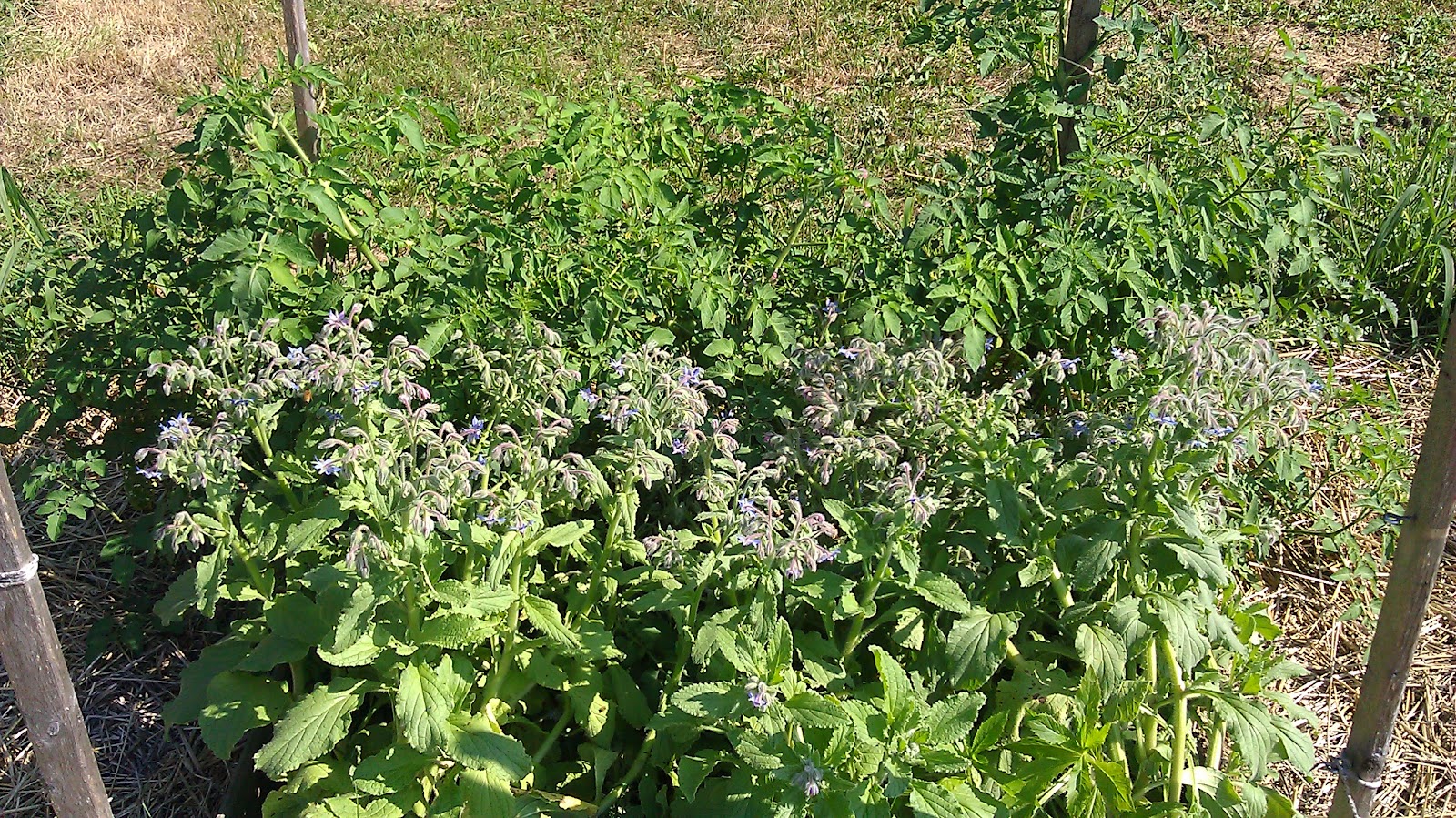
Once you plant borage you never need to plant again. Half of this raised bed is full of beautiful blue flowering borage. The flowers are so good. I eat a handful everyday I am in the garden.


This is the horseradish. It is doing very well. I want to split and move half of it to another location in the garden soon. I dug some up earlier this year, the flavor is amazing!


We still have 6-7 heads of cabbage getting bigger and bigger. I just planted a variety that gets up to 10 pound heads.


Here are some peppers. The peppers I start from seed always start out slow but once they hit the heat of summer they go crazy. 


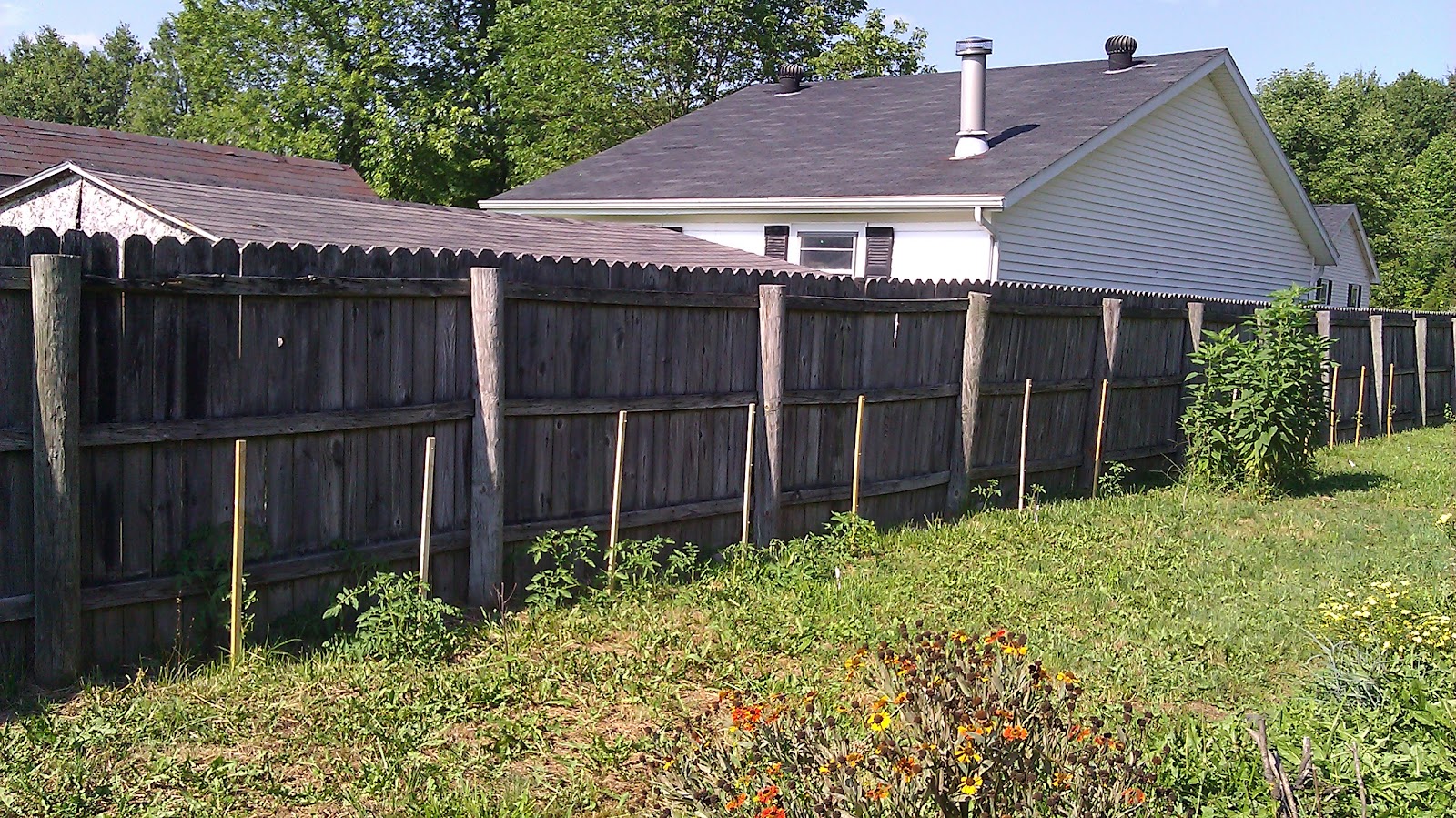
All the stakes along the fence have a tomato I started from seed staked up to it. The tall sunflower looking plants on the right are Jerusalem artichokes. I can't wait to harvest them in the fall.


Here is the asparagus patch. I have been very good and have only eaten one spear over the last two years. This coming spring will be year three and we will be enjoying fresh asparagus for a few weeks.


Here is a shot of the garden. I finally got all the straw down after a storm coming in and blowing my hard work all over the yard.


I have upgraded the arrow target. The round bale was to short and we lost a couple arrows over the top. 


Friday, March 30, 2012

Odds and Ends

We have been extremely busy with EMT class.
 Dara and I are volunteers with our local 
Fire Dept and we are currently in school for EMT basic. 
It is hard to get anything done between working 40+ hours a week
 and class. We plan on being more active on the blog and 
on the homestead once class is over. 

Here are a few quick things I thought I would share.


Our hops are coming up like crazy!
 I need to get out there to string them up and cut them back soon.


Here is year two on the asparagus patch.
 I am so tempted to eat the few stalks coming up right
 now but I will control myself for the greater 
good of the patch. Next year its on! 


I was at the big box store the other day and found
 cedar fence posts on clearance for .34 each!
 I bought everything they had. This is the second truck load.
 I will post soon on what I plan to do with them, it's not a fence.

Sorry about the bad picture quality. 
These are from my phone and not edited.
 Again we will be more active soon once class is over.