Showing posts with label jerusalem artichoke. Show all posts

Friday, September 13, 2013

Flowers From Around The Garden


I was walking around the garden yesterday and was surprised by the amount of flowers still in bloom. Having a large variety of plants flowering in your garden is beneficial in many ways. First is beauty, I will step out of my power tool infested man-cave and say, flowers make me happy, plain and simple. Secondly, flowers of different colors, shapes, and sizes bring all kinds of beneficial insects to your garden. Some of these insects are predators that help control insect pests, and some are pollinators that will help pollinate your food crops while they are in the area. Last but not least, many flowers have medicinal properties or are edible, or both. Here are some pics I took yesterday.


This is one of our favorite flowers in the garden. Cosmos (Cosmos bipinnatus) is native to Mexico. The flowers attract birds and butterflies, and bees love them.


We bought a perennial flower seed mix that had dozens of different flowers in it. I am not sure what this is but it is a beautiful flower.


Same thing here, some kind of perennial flower. In the spring I plan on filling the beds along the back of the property with this mix.


Marigolds are very beneficial. They are said to deter some insect pests and bring in beneficial insects. This is a french marigold (Tagetes patula), it is not edible, just beneficial. Some people confuse the inedible french marigold with the edible, sort of look a like, Calendula (Calendula officinalis).


This is Borage (Borago officinalis), which is very edible and delicious. The flowers continuously bloom all through the season. Bees love these flowers and they make a nice addition to a salad.


The first Jerusalem Artichokes (Helianthus tuberosus) are blooming. I took this picture with the camera extended as high as I could above my head and the flower was still a few feet away. Right now these plants are around 10-12 feet tall. I did a detailed post on Jerusalem Artichokes here if you are interested.


Not sure what this plant is. I was about to cut them all down when I noticed it was about to bloom. I am going to leave one and take the rest out. It has a very woody stalk that leads me to believe it might be a perennial. We will see if it comes back in the spring.


This is a perennial I bought in a big box store clearance sale. Not sure what it is, but it comes back every year and the bees like it.


Same here, this is a perennial from a clearance sale. I have a hard time passing up .50 cent flowering perennials.


My addiction strikes again. I often think about getting a part time job at my local big box store just so I can get first dibs on the clearance plants!


Yarrow (Achillea millefolium) is a very valuable plant in the garden. It is a good companion plant, a medicinal and edible. It attracts predatory wasps, ladybugs and hover flies; all very beneficial to have around. It is said to improve the health of sick plants it is near to. Yarrow has been used for centuries as a pain reliever, an astringent, an anti-inflammatory,  a diaphoretic and it was used in ancient times to stanch blood flow in wounds. In those days it was called herbal militaris.


Thursday, January 31, 2013

Jerusalem Artichokes


Jerusalem Artichoke (Helianthus tuberosus) also know as sunchoke, sunroot and earth apple. It is a species of sunflower that produces an edible tuber instead of seed. It is native to North America and was cultivated by native Americans for centuries. This is how the Jerusalem Artichokes looked in August before they flowered. They grew to about 10 feet tall and flowered like crazy. 


I cut the stalks back to about 5 feet after they flowered. From what I have read, I should have cut all the flowers off leaving the stalks and leaves to continue growing the tubers. By cutting the flowers the plant will focus most of its energy into producing tubers. This plant is one of the first in the garden to die back to cold weather. 


It is best to wait until a couple frosts have come before you harvest the tubers. The colder the weather the sweeter the tubers, so they say. I had planned on harvesting them sometime in December, but I never got around to it, then the ground froze. We just had a warm spell, it was in the 60's two days ago, so I thought I should get out and do it. 


There was a casualty in the process. I usually buy the best garden tools I can afford. I thought I had done that with this pitch fork, but I didn't realize the main part of the fork was welded on the the frame in two small spots. I will make sure the next one is constructed better.


So here is the harvest. I think I would have had more if I hadn't cut the stalks back so much. I will just cut back the flowers this season and see if the yield is better.


Here they are cleaned up. Some earth worms got into a few of them. I wonder if I harvested earlier, maybe the worms would have not gotten to so many. I will use the worm eaten ones as my seed crop for this season. They didn't do a lot of damage, mostly just cosmetic. 


So I ended up with about 11.5 pounds of Sunchokes. I put about 4 pounds aside to replant for this season. I originally planted about 1.5 pounds so that is a pretty good return. 


There are many ways to cook them. They are very good raw. We chose to saute them with onions and butter. They can be boiled, mashed, baked or anything you would normally use potatoes with. They have a slight nutty / earthy flavor. Eaten raw they remind me a little bit of water chestnuts. 


I read many warnings about the bodies inability to digest Inulin, a carbohydrate found in the tubers. This leads to some mild to severe cases of flatulence. I believe this quote from 1621 by John Goodyer describes it best:

"which way soever they be dressed and eaten, they stir and cause a filthy loathsome stinking wind within the body, thereby causing the belly to be pained and tormented, and are a meat more fit for swine than men."


I will say I could have powered a small methane generator after eating the amount you see on the plate. I think if you ease into eating them you could build up the gut flora to handle them. I will let you know how the ongoing experiment goes. =)


Tuesday, September 25, 2012

Garden Flowers

Just thought I would share a pic of a flower arrangement I made for Dara. I had to cut the Jerusalem Artichoke flowers so they put their energy into the tubers and thought I would see what else was in bloom.


Flowers: Jerusalem Artichoke, Borage, Marigold, Yarrow and some white flower I found growing in the perennial flower bed.  
 

Monday, July 30, 2012

Homestead Update

Its been a while since I walked the property and took pictures. Here a few images from around the yard and garden. These pics were taken with my cell phone so I apologize for the poor quality. I find if I take pics with the cell phone I do more posts because its easier. It's a trade off.


In the center are our beach roses "rosa rugosa". The purple / pink are the flowers and the red you see are the rose hips. These roses produce one of the largest rose hips of all roses, full of vitamin C.


Here is whats left of our corn. A squirrel came in the day after I planted and dug up close to half of the corn I planted. Squirrel season starts Sept 1st, my corn should be ready towards the middle of Sept..... squirrel corn stew?


I planted over a hundred pole beans yesterday. The left row is a green bean and the right row is scarlet runner bean. We plan on canning a bunch in Sept.


Here is the compost / raised bed / volunteer plant nursery. We got our first ripe tomatoes of the year from volunteers that came up in the compost pile. The raised bed in the foreground has spinach, various herbs and okra planted in it. 


Here are my cascade hops. I was very busy with school when these came up in the early spring. I did not string them up right away so they did not grow to their potential this season. 


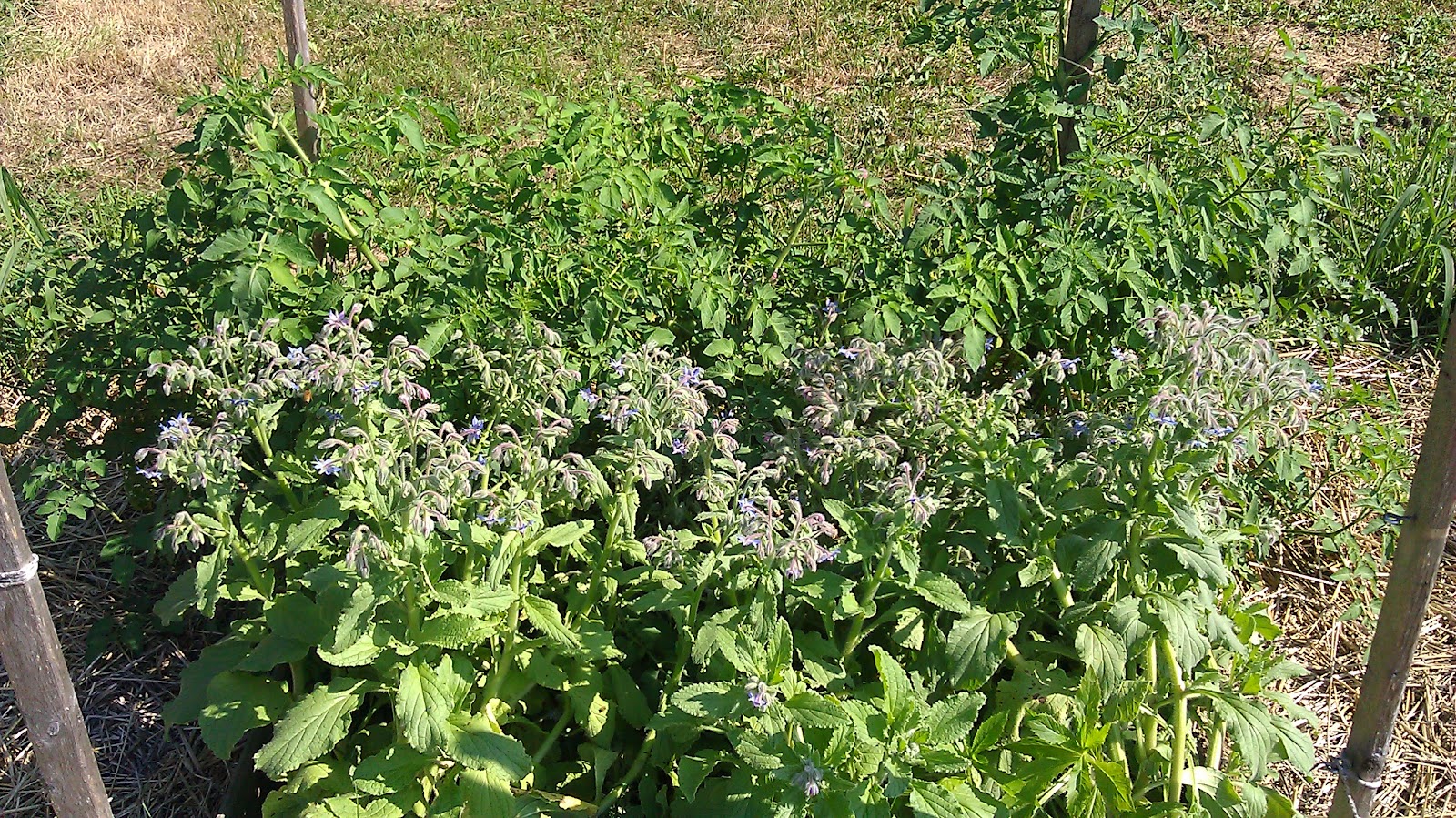
Once you plant borage you never need to plant again. Half of this raised bed is full of beautiful blue flowering borage. The flowers are so good. I eat a handful everyday I am in the garden.


This is the horseradish. It is doing very well. I want to split and move half of it to another location in the garden soon. I dug some up earlier this year, the flavor is amazing!


We still have 6-7 heads of cabbage getting bigger and bigger. I just planted a variety that gets up to 10 pound heads.


Here are some peppers. The peppers I start from seed always start out slow but once they hit the heat of summer they go crazy. 


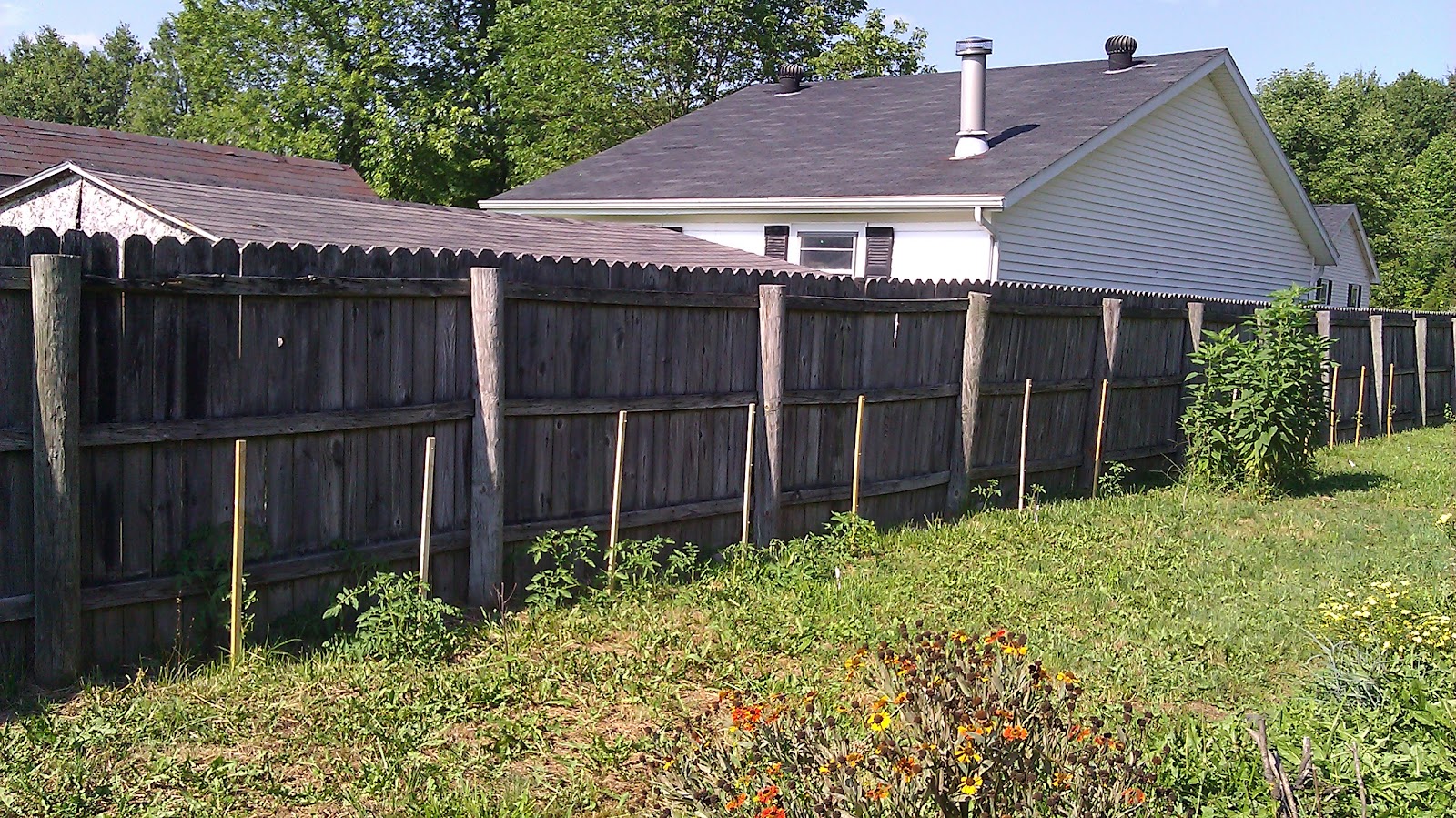
All the stakes along the fence have a tomato I started from seed staked up to it. The tall sunflower looking plants on the right are Jerusalem artichokes. I can't wait to harvest them in the fall.


Here is the asparagus patch. I have been very good and have only eaten one spear over the last two years. This coming spring will be year three and we will be enjoying fresh asparagus for a few weeks.


Here is a shot of the garden. I finally got all the straw down after a storm coming in and blowing my hard work all over the yard.


I have upgraded the arrow target. The round bale was to short and we lost a couple arrows over the top.