Showing posts with label rosa rugosa. Show all posts

Thursday, October 3, 2013

Growing Your Own Vitamin C in Zone 6a


Okay, think back to a very cold January in your past. Did you have to pull out your "winter" jacket on that terrible day the temperature dropped to a frigid 40 degrees Fahrenheit? If the answer is yes, then you are geographically lucky and probably live in a climate where large reptiles could kill and eat you if you are not diligent. If the answer is no, you may live in the mid-west like me and can't grow citrus. So how does a gardener grow vitamin C in the mid-west? Plant a rose...


This beautiful rose is called Rosa Rugosa (R. rugosa). It is native to eastern Asia, where it grows near the coast, typically on sand-dunes. Its natural range goes from southeastern Siberia to northeastern China. It is found on the Island of Japan as well. It has many common names including; beach rose, shore eggplant, shore pear, beach tomato, sea tomato, beach plum, sea rose, salt-spray rose and in Korea, it's name translates to "flowers near seashore".

Rosa Rugosa is now found all over the world. It was introduced to the United States via New England in the 1770's. It quickly spread into the wild due to its ability to tolerate salt spray, ease of propagation and the fact that it is hardy down to USDA zone 2.  It is considered invasive in many parts of the world. One of these days I will do a post on my position on "invasive" plants. Suffice it to say, I have Rosa Rugosa all over my property.


Most rose gardeners will dead head their roses to trick the plant into producing more flowers. With Rosa Rugosa you want to let the flowers fall off naturally. You will be left with these, the rose hip, also know as rose haw and rose hep. Rosa Rugosa has some of the largest rose hips of any rose. When they mature they are one of the highest concentrations of vitamin C in the plant kingdom. When dried, they have a 1-2 percent L-ascorbic acid (vitamin C) concentration, making them higher in vitamin C than citrus.

During WWII, German submarines were sinking many commercial ships around Great Britain making it very hard to get citrus. A campain was started in Britain to encourage the wild harvesting of rose hips to make a syrup for infants and children. Severe vitamin C deficiency is known as scurvy. There is a reason pirates (in the movies at least) use scurvy as a derogatory word, you don't want it!


Rose hips are packed full of lycopene, an antioxidant that prevents oxidation of LDL particles in your blood, that's a good thing. It also has vitamins B and A as well as essential fatty acids the body cannot produce for itself. Rose hip tea has traditionally been used to treat respiratory infections, joint pain and as a salve to treat sore mouths. Here is an abstract of a study concluding using rose hip powder benefits people with rheumatoid arthritis. Here is another study, same result for osteoarthritis.

Some care must be taken when eating them. Once the rose hip has ripened you can eat them raw by simply biting off the outside of the fruit. You don't want to pop one in your mouth and chew because they have seeds, and most importantly, fine sliver like hairs in the interior that have traditionally been used to make itching powder.

The internet is full of how to's on making rose hip tea, fruit leather, soup, jelly, jam, syrup etc... I will add that if you wait to harvest them until after the first frost, they will have more concentrated sugars. If you need one more reason to start growing this plant on your property, you can make wine out of it. What more do you want in a plant?


Friday, April 5, 2013

The Homestead Is Waking Up

I have been spending more and more time outside recently. The garden is quiet but, some things are waking up. Walking around the yard with a glass of wine yesterday, I felt the stress of the day to day easing and I realized how good gardening and nature make me feel. 

If you do not garden I suggest giving it a try. Even the most ambitious gardening plans are cheaper than a shrink.


This is a mini greenhouse I made to give the Russian Comfrey and Jerusalem Artichokes a head start. I really want to build a proper greenhouse so I can start gardening even earlier.  


I pulled a few Comfrey starts out to check the growth. They are doing very well. The Jerusalem Artichokes are not coming up yet, but I have no worries they will.


Here is a close up of the a Comfrey start. I wasn't very gentle with mother plant. I just put a spade shovel in the middle of it and stepped down. It is amazing how well this plant splits and grows.


This big brown spot in my yard was put there intentionally. I raked all my fall leaves into a big pile and left them there to kill the grass all winter. I recently raked them off the dead spot so I could plant some white clover. I am trying to get large clover patches established in the yard to harvest for future livestock. 


Here is the garlic bed. They did very well overwintering despite me not mulching them. I can't wait to harvest some scapes soon.


Here is a close up of the garlic. I have 6 heirloom varieties growing, 3 hardneck and 3 softneck. 


The Rosa Rugosa is budding out. I have this rose in multiple locations on the property. I enjoyed the rose hip tea I made last year. I plan on propagating some runners and planting it in more spots this year. 


Finally, after trying for two years, I got some rhubarb established. It looks so healthy and vibrant, I can't wait to make some strawberry rhubarb gluten free pie!


Here is our golden raspberry. We only got a few off of the plant last year. This will be the second year and I hope it goes crazy. Golden raspberries are so sweet and plump. I will definitely be propagating this to plant around the property. 


Wednesday, October 10, 2012

Tea and the Ugly Tomato


I saw some ripe rose hips on my beach rose (Rosa rugosa) on a walk around the garden last night. I picked them and a handful of mountain mint (Pycnanthemum muticum). I added another mint and some borage flowers as well. I boiled the rose hips for 3 minutes and then added everything else and steeped for 10 minutes in the kettle. 


The only ingredient I added that was not form the back yard was some honey. This spring I should be harvesting my own honey so I could make this next year completely from the back yard. It had a great flavor and was very calming. 


Okay, this is the ugliest tomato I have ever grown. It looks like I super glued a bunch of small tomatoes together. But I bet if this tomato was ripe it would be delicious! I had to pick all of the green tomatoes due to the frost coming. I will post on what I am doing with them later. 


Monday, July 30, 2012

Homestead Update

Its been a while since I walked the property and took pictures. Here a few images from around the yard and garden. These pics were taken with my cell phone so I apologize for the poor quality. I find if I take pics with the cell phone I do more posts because its easier. It's a trade off.


In the center are our beach roses "rosa rugosa". The purple / pink are the flowers and the red you see are the rose hips. These roses produce one of the largest rose hips of all roses, full of vitamin C.


Here is whats left of our corn. A squirrel came in the day after I planted and dug up close to half of the corn I planted. Squirrel season starts Sept 1st, my corn should be ready towards the middle of Sept..... squirrel corn stew?


I planted over a hundred pole beans yesterday. The left row is a green bean and the right row is scarlet runner bean. We plan on canning a bunch in Sept.


Here is the compost / raised bed / volunteer plant nursery. We got our first ripe tomatoes of the year from volunteers that came up in the compost pile. The raised bed in the foreground has spinach, various herbs and okra planted in it. 


Here are my cascade hops. I was very busy with school when these came up in the early spring. I did not string them up right away so they did not grow to their potential this season. 


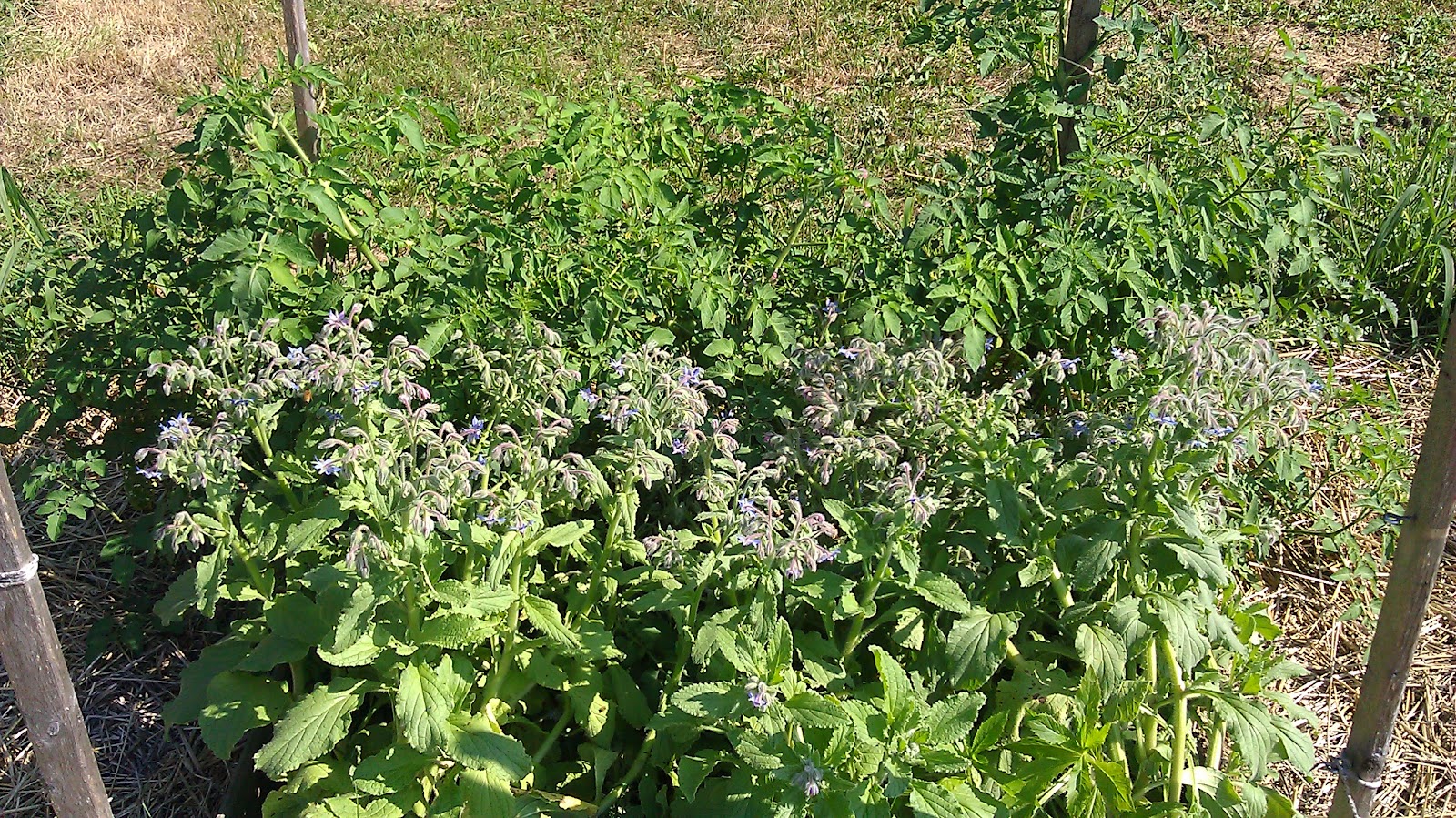
Once you plant borage you never need to plant again. Half of this raised bed is full of beautiful blue flowering borage. The flowers are so good. I eat a handful everyday I am in the garden.


This is the horseradish. It is doing very well. I want to split and move half of it to another location in the garden soon. I dug some up earlier this year, the flavor is amazing!


We still have 6-7 heads of cabbage getting bigger and bigger. I just planted a variety that gets up to 10 pound heads.


Here are some peppers. The peppers I start from seed always start out slow but once they hit the heat of summer they go crazy. 


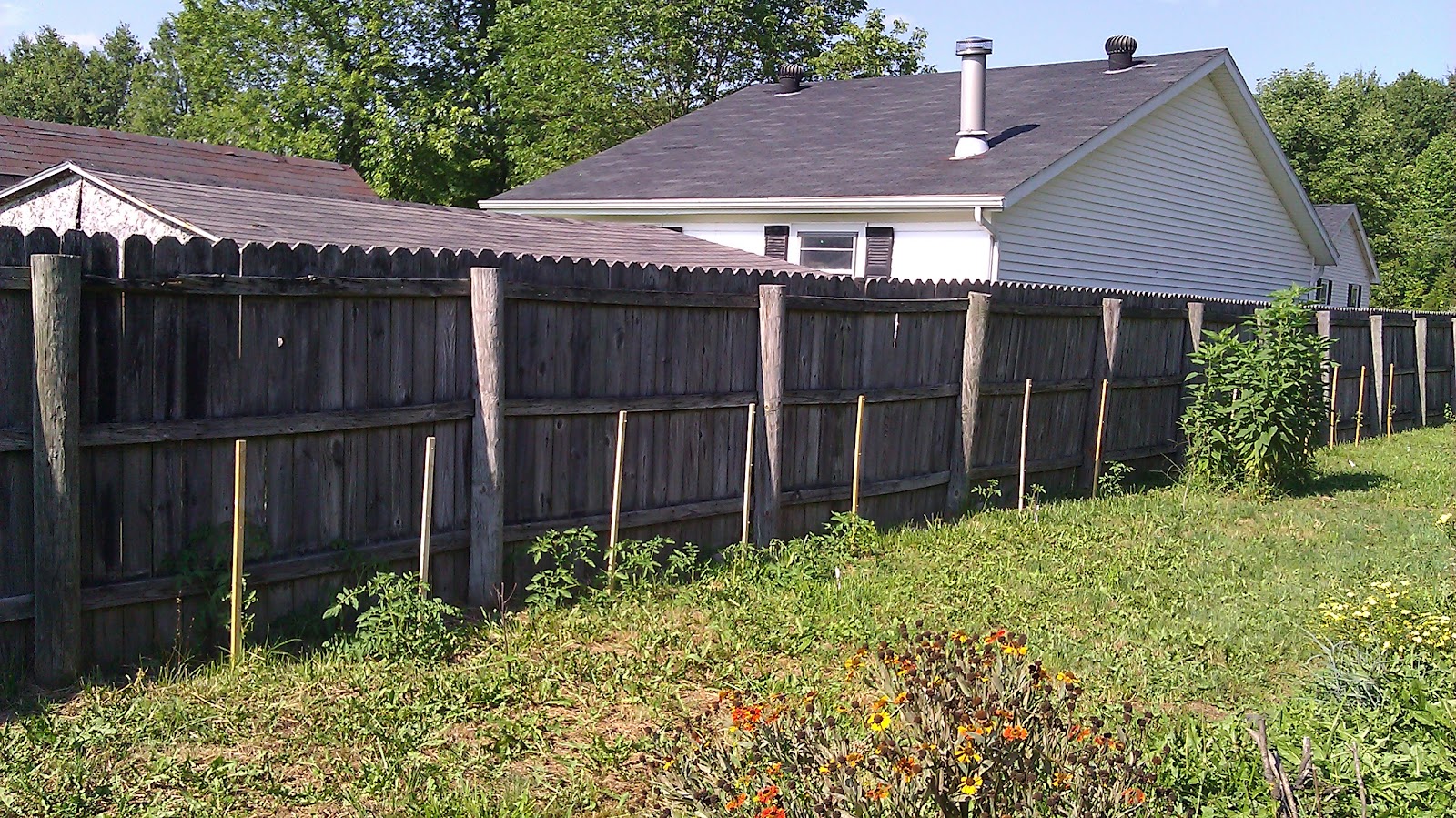
All the stakes along the fence have a tomato I started from seed staked up to it. The tall sunflower looking plants on the right are Jerusalem artichokes. I can't wait to harvest them in the fall.


Here is the asparagus patch. I have been very good and have only eaten one spear over the last two years. This coming spring will be year three and we will be enjoying fresh asparagus for a few weeks.


Here is a shot of the garden. I finally got all the straw down after a storm coming in and blowing my hard work all over the yard.


I have upgraded the arrow target. The round bale was to short and we lost a couple arrows over the top.